ARC Sites Explained: A Guide for New Indie Authors
“Advance reader copies are a legitimate and ethical way to gather early reviews—so long as readers are free to leave honest feedback, positive or negative.” – Jane Friedman
If you’re a new indie author researching ARC (Advance Reader Copy) sites, you may have experienced a moment of confusion that feels something like this:
You understand the goal. You want early readers to read your book and, if they’re willing, leave honest reviews around launch time. That part makes sense. What doesn’t make sense is why ARC sites feel more like software dashboards than simple author tools.
Terms like “unlimited file delivery,” “platform discovery,” and “free integrations” can make ARC sites feel far more complicated than expected, especially if you don’t already have an email list or a marketing system in place.
The good news is this: ARC sites are much simpler platforms than their websites make them appear. Once you understand what they actually do and don’t do, you can decide whether you need one and how to use it without overwhelm.
What ARC Sites Really Do
At their core, ARC platforms serve two practical purposes.
- They provide a secure, professional way to deliver your book files to early readers.
- They help you manage that process without having to email attachments or troubleshoot technical issues yourself.
That’s it.
ARC sites are notreading clubs, review-swap systems, or marketing courses. They are author tools to help distribute your book before it’s published, so readers can access it easily on their preferred devices. Think of ARC sites as digital mailboxes for your book. They help you hand it to readers safely and professionally.
If you keep that mental model in mind, most of the confusion falls away.
What Is an ARC—and Why Use One?
An Advance Reader Copy (ARC) is a pre-published version of your book that you share with selected readers before or around your launch date. The purpose is simple:
- Read the book before or near launch
- Leave an honest review (typically on Amazon or Goodreads)
Essentially, ARCs give readers time to read the book, so their reviews can appear early in your book’s published life.
ARC readers are never required to leave a review, and reviews are never expected to be positive. Ethical ARC use depends on honesty and transparency. You’re offering early access, not compensation or pressure.
For new indie authors, even a handful of early reviews can make a meaningful difference in visibility and reader trust.
The Big Question: Who Are the ARC Readers?
This is where many new indie authors get stuck. The key to getting unstuck is understanding which platforms offer delivery-only versus delivery plus discovery. ARC platforms do not automatically give you readers by default.
Instead, readers come from one (or more) of three sources.
- Some ARC readers are people you already know. These might be beta readers, friends, colleagues, teachers, librarians, or anyone who has expressed interest in your book. If you had an email list, you’d simply send them a download link. If you don’t have a list, that’s okay. It’s completely normal. Many new indie authors don’t have an email list, especially for their first or second books.
- Other ARC readers exist inside certain ARC platforms themselves. Some platforms have built-in communities of readers who browse available ARCs and request books they want to read. They sometimes specialize in specific genres. These readers join the platform specifically to receive early copies and leave reviews. This is often what authors expect ARC platforms to provide, but not all of them do.
- Finally, some authors find ARC readers through social media, writing groups, personal outreach, or private links. In those cases, the ARC platform simply hosts the file and handles delivery.
Why ARC Platform Language Feels So Confusing
Most ARC sites are designed for experienced authors and marketers, not beginners. As a result, they advertise maximum capability rather than minimum usability.
When you see phrases like “unlimited file delivery,” it simply means you can upload your book in common formats, such as EPUB or PDF, and send it to as many readers as you want. “Unlimited downloads” means readers can download your book without caps or limits. “Free integrations” refers to optional connections with email services or review tracking tools. You do not need integrations to run a basic ARC campaign.
None of these features requires advanced knowledge. They sometimes just need a more beginner-friendly explanation.
How ARC Platforms Differ
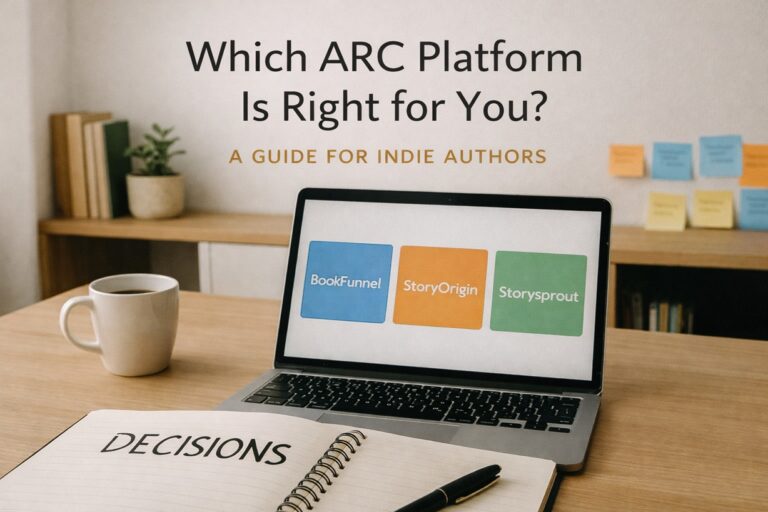
Although ARC platforms overlap, they are not identical. We’ll look at three examples of the many available ARC sites.
BookFunnel
BookFunnel is best understood as a delivery system rather than a reader marketplace.
- You upload your book
- You share a download link
- BookFunnel helps readers load the file onto their devices
BookFunnel’s standout feature is reader support. It allows readers to load files onto their devices, saving you time and frustration. If you already have beta readers or personal contacts willing to read your book, BookFunnel is often the cleanest, least stressful option.
Think of it as Dropbox + reader tech support.
StoryOrigin
StoryOrigin combines delivery with optional discovery. Although StoryOrigin also supports newsletter swaps and cross-promotion, those features are optional. You are not required to read other authors’ books to use StoryOrigin. It allows authors to list ARCs that readers within the platform can find and request. For authors without an email list, StoryOrigin can provide modest visibility without requiring complex setup.
- Readers browse ARC opportunities
- Authors can offer ARCs publicly
- Participation in swaps is optional
BookSprout
BookSprout is the most review-focused of the three. Readers join BookSprout specifically to receive ARCs, and the platform emphasizes review reminders and tracking. While the reader pool is smaller, the intent is clear and structured, which some authors find reassuring. It’s the closest to a “plug-and-play” ARC system, though the reader pool is smaller.
BookSprout focuses specifically on:
- ARC readers
- Review reminders
- Accountability
What Actually Happens After You Upload Your Book
Despite their often unfamiliar terms, the ARC process itself is straightforward. You upload your book file, create a download link or ARC page, and share it either privately or through platform discovery. Readers download the book, read it on their own time, and, if they choose, leave a review around launch.
There is no requirement to read other books and no obligation to participate in swaps, unless you choose to. Everything beyond file delivery is optional.
Here’s the actual ARC workflow, step by step:
- Upload your book file (EPUB and/or PDF)
- Create an ARC landing page or link
- Share the link (or list it for platform discovery)
- Readers download the book
- You follow up politely at launch
- Reviews appear (over time)
A Simple ARC Strategy for New Indie Authors
If you’re just starting out, aim small. Five to fifteen ARC readers are more than enough for a first or second book. Choose one platform, ignore advanced features, and focus on clear, polite communication with readers. That’s enough for a solid launch foundation.
ARC success comes from simplicity and follow-through, which is often key.
ARC Setup Checklist
Use this checklist to keep things manageable:
- Choose one ARC platform
- Prepare a clean EPUB and/or PDF
- Write a short ARC invitation message
- Upload your book and generate a download link
- Invite readers or enable platform discovery
- Track who has access
- Send a polite launch-day reminder (optional)
- Thank readers regardless of whether they review
ARC Sites Wrap Up
ARC sites feel overwhelming because they are designed for scale, but you don’t need scale to use them well. Once you separate file delivery from reader discovery, the process becomes clearer, manageable, and even empowering.
Used simply, ARC platforms are tools that help your book meet its first readers, one honest review at a time.
FAQs
Do I have to read other authors’ books if I use an ARC platform?
No. ARC platforms do not require review swaps. Some communities offer them as options, but participation is always voluntary.
Can I use ARC sites if I don’t have an email list?
Yes. Platforms with discovery features allow readers within the system to find your ARC without you having to email anyone.
How many ARC readers do I need?
For new indie authors, 5–15 readers is realistic and effective. More is not always better.
Do ARC readers have to leave reviews?
No. ARC readers agree to consider leaving an honest review, not to guarantee one.
Is it unethical to use ARC readers?
No. ARC reviews are ethical when readers are informed they received a free copy and are encouraged to leave honest feedback.
We hope you’ve found the writer’s guide strategies useful and motivating. We hope they’ll equip you with the insights and tools needed to help you succeed as a new author.
For more guidance, see other writer’s guides in the ARC series. You might The Definitive Guide to ARC Reviews: How to Get Reviews on Amazon Before Your Book Takes Off
Writing is a journey of continuous learning and improvement. You don’t have to go it alone. We’re excited to continue the journey with you, providing guidance and encouragement every step of the way. Our goal is to provide essential insights and practical advice to help you navigate the writing world with increased confidence.
If you have a draft you want to publish and are wondering how AI can help, read:. Is Your Book Ready to Self-Publish? Lastly, for help writing a non-fiction book, read Write Your First Non-Fiction eBook: a 30-Day Workbook for Getting It Done.
Don’t wait. Start today!
How can we help? To let us know, please fill out our Contact form. Happy writing!