Is SEO Dead? What to Know About GEO and AI Search
“SEO isn’t dead. It’s just evolving as search gets better at understanding people rather than keywords.” — Danny Sullivan, Google Search Liaison
Welcome to the central pillar of our multi-part series, SEO, GEO, and AI Search for Indie Authors, designed to help you feel empowered and confident in improving your online visibility.
This writer’s guide explains the evolving world of search, including:
- SEO (Search Engine Optimization)
- GEO (Generative Engine Optimization)
- AEO (Answer Engine Optimization)
- How AI tools like ChatGPT, Gemini, Bing Copilot, and Perplexity deliver answers
- How indie authors can stay discoverable in a changing search landscape
This is your home base.
The rest of the writer’s guides in this series will dive deeper into specific strategies, but this is where everything connects. If you’d like to have all of the AI powered search strategies in one place, read SEO, GEO, and AEO for Indie Authors: Strategic Optimization for AI Search (paperback or eBook).
1. Is SEO Dead? The Real Answer
You may hear headlines claiming “SEO is dead,” and wonder if it still matters for new indie authors.
Here’s the truth:
SEO isn’t dead. But the old way of doing SEO is.
Outdated tactics like keyword stuffing, spammy backlinks, or over-optimized text no longer work. Search engines and AI tools are now far better at understanding:
- Meaning
- Intent
- Clarity
- Expertise
- Value to the reader
For new indie authors, that’s good news. You don’t need to try to “game” search engines anymore.
You simply need to write helpful, well-structured content grounded in real experience.
“SEO isn’t dead. It’s just evolving as search gets better at understanding people rather than keywords.” —Danny Sullivan, Google
If your content genuinely helps readers, both search engines and AI systems will surface it.
This is your home base for understanding how AI search, GEO, and AEO are transforming discoverability, inspiring you to stay proactive in adapting your strategies.
The shift is massive:
Search is no longer just about Google’s ten blue links.
We now have:
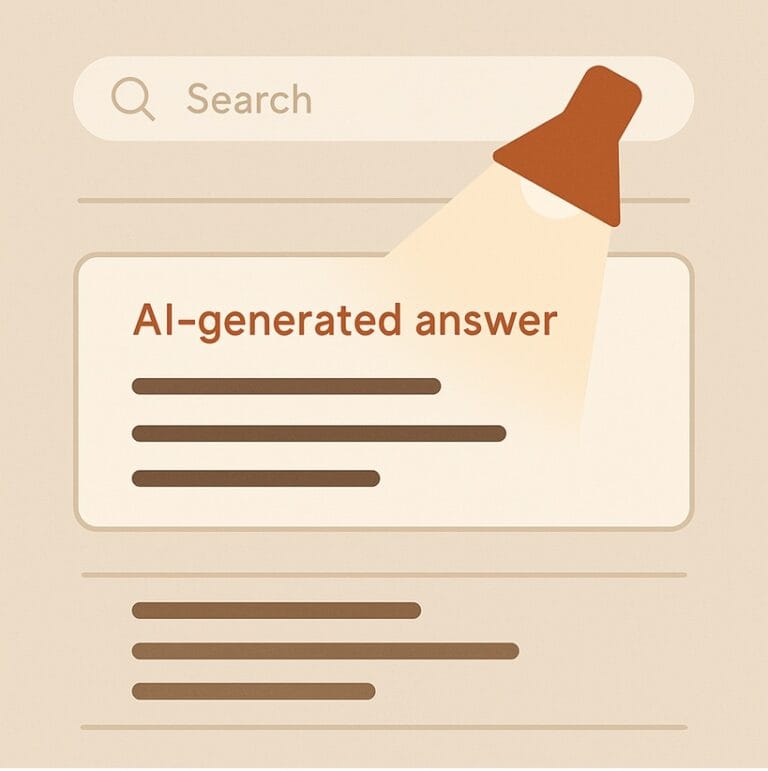
- AI-generated summaries
- Chat-style answers
- Citation-based responses
- In-search generative overviews
- Stand-alone answer engines
- AI referencing trustworthy websites and authors
To understand where AI surfaces your content, you need to know two terms:
GEO (Generative Engine Optimization)
GEO is about optimizing your content so AI models quote or reference you in their answers.
AI tools favor content that is:
- Well-structured
- Clear
- Skimmable
- Supported by sources
- Written with authority
Even if the reader never clicks your site, your content can appear inside the AI’s answer.
That’s GEO.
AEO (Answer Engine Optimization)
AEO focuses on helping AI choose you as the preferred answer.
Answer engines (ChatGPT, Perplexity, Gemini) look for:
- Direct explanations
- Defined terms
- Lists
- Clear steps
- FAQ sections
- Summaries
- Evidence
If your content is structured this way, you dramatically increase your chances of being surfaced by AI.
3. SEO vs GEO vs AEO (Simple Comparison for Authors)
| Approach | Goal | Where It Matters | Why Authors Should Care |
| SEO | Rank in Google/Bing | Traditional search | Helps readers discover your website |
| GEO | Appear inside AI-generated answers | ChatGPT, Gemini, Copilot | AI quotes your content even without clicks |
| AEO | Become the AI’s preferred response | Answer engines | Establishes you as an authority |
These are not replacements.
You use all three together to stay competitive in modern search.
4. Understanding User Intent
Search has changed, but user intent hasn’t.
People still search because they need something.
There are four types of intent:
1. Informational: “How do I self-publish a book?”
2. Commercial: “Best editing tools for authors”
3. Transactional: “Buy indie sci-fi novel on Kindle”
4. Navigational: “Kickass Writers Guide website”
If your content doesn’t match the intent, search engines and AI won’t surface it.
“If your content doesn’t satisfy search intent, nothing else you do will matter.” —Neil Patel
Matching intent is one of the strongest factors in modern SEO and AEO.
5. Relevance vs Keywords (What Matters Now)
Keywords still matter, but they are not the point.
Relevance is.
Search engines and AI models now understand:
- Synonyms
- Related ideas
- Topic clusters
- Natural language
- Context
This means you can, and should, use natural language.
Instead of writing: “best book marketing tips” or “cheap book marketing.”
Write: “Here are the most effective book marketing strategies new indie authors are using right now, and how to apply them step by step.”
Relevance wins over repetition, every time.
6. How to Structure Content for SEO + GEO + AEO
AI systems prefer content that is easy to parse.
Readers prefer the same.
Use this structure for every article:
A. Strong Headings: H2 and H3 help AI understand the outline.
B. Short Paragraphs: 1–3 sentences per paragraph.
C. Bulleted Lists: AI loves lists because they’re clear.
D. Direct Answers: Start sections with the key answer first.
E. FAQ or Q&A Blocks: These are heavily used by answer engines.
F. Summaries + TL;DRs: AI frequently pulls from these.
This structure makes your content both reader-friendlyand machine-friendly.
7. Practical Steps for Indie Authors
- Write for real readers: What do they ask you in emails or DMs? Start there.
- Use natural keywords: Let related terms appear organically.
- Include stats, quotes, or examples: AI values verifiable information.
- Diversify formats: Blog posts, images, short videos, and infographics all help.
- Update content regularly: AI tools favor fresh, accurate information.
- Build authority (E-E-A-T): Share your experience and expertise clearly.
8. TL;DR: SEO Isn’t Dead. It’s Evolving
- SEO helps readers find your website.
- GEO helps AI include your content in its answers.
- AEO helps you become the AI’s preferred explanation.
The path forward for indie authors is simple. Do these, and search engines and AI will reward you:
Help readers.
Answer real questions.
Structure content clearly.
Keep learning and updating.
9. Updated SEO & GEO Checklist
Before You Write
- Identify reader questions
- Research trends
- Outline subtopics and FAQs
While Writing
- Use headings (H2/H3)
- Short paragraphs
- Clear lists
- Natural keywords
- Direct answers
- Examples + sources
After Publishing
- Share in your email list
- Post on social media
- Update regularly
- Track new reader questions
10. SEO, GEO & AI Search for Indie Authors Series Overview
This pillar article introduces the main concepts. The full series will expand on each topic in depth. Here’s what’s coming next:
1. SEO vs GEO vs AEO. What Indie Authors Must Understand
Clear comparisons, examples, and use-cases.
2. How AI Search Engines Discover Author Websites
What ChatGPT, Gemini, and Copilot actually “see.”
3. Keyword Research for Authors
What readers search for — with tools and examples.
4. Understanding Reader Search Intent
How to write content that meets readers where they are.
5. E-E-A-T for Indie Authors
How to build credibility that AI recognizes.
6. How to Write GEO-Friendly Blog Posts
Templates for authors to copy and use.
7. AEO for Authors
How to become the “preferred answer” in AI tools.
8. The 12-Month SEO & GEO Content Plan
What to publish and when.
9. Common SEO Mistakes That Hurt Author Visibility
And how to avoid them.
10. Tools Indie Authors Can Use for SEO, GEO & AEO
Author-friendly, budget-friendly tools.
FAQs
Is SEO dead, or does it still matter for authors?
SEO is not dead. It has evolved. Traditional SEO still helps search engines find content, while GEO and AEO help AI systems understand, trust, and reuse it. For authors, SEO, GEO, and AEO now work together rather than replacing one another.
What’s the difference between SEO, GEO, and AEO?
SEO focuses on ranking content in search results, GEO focuses on making content usable by AI systems, and AEO focuses on providing clear answers AI can reuse. Together, they help authors get discovered by both humans and machines.
Does AI search replace Google search?
No. AI search complements traditional search. Google still drives discovery, while AI systems summarize, recommend, and reuse content. Authors benefit from optimizing for both.
Can new indie authors compete with big websites?
Yes. New indie authors often have an advantage because AI systems value firsthand experience, clarity, and relevance. Well-structured content written from real experience can outperform larger sites that publish generic information.
How long does SEO and GEO take to work?
SEO and GEO are cumulative. Early signals can appear within weeks, but meaningful visibility usually builds over several months through consistent publishing and updates.
We hope you’ve found the writer’s guide helpful and motivating.
We hope it equips you with the insights and tools to succeed as a new author.
For more guidance, see other writer’s guides, such as AI Empowers New Indie Authors: 5 Best Hacks.
Becoming an indie author is a journey of continuous learning and improvement. You don’t have to go it alone. We’re excited to continue the journey with you, providing guidance and encouragement every step of the way. Our goal is to provide essential insights and practical advice to help you navigate the writing world with increased confidence.
If you have a draft you want to publish and are wondering how AI can help, read it. Is Your Book Ready to Self-Publish? Lastly, for help writing a non-fiction book, read Write Your First Non-Fiction eBook: a 30-Day Workbook for Getting It Done.
Don’t wait. Start today!
How can we help? To let us know, please fill out our Contact form. Happy writing!