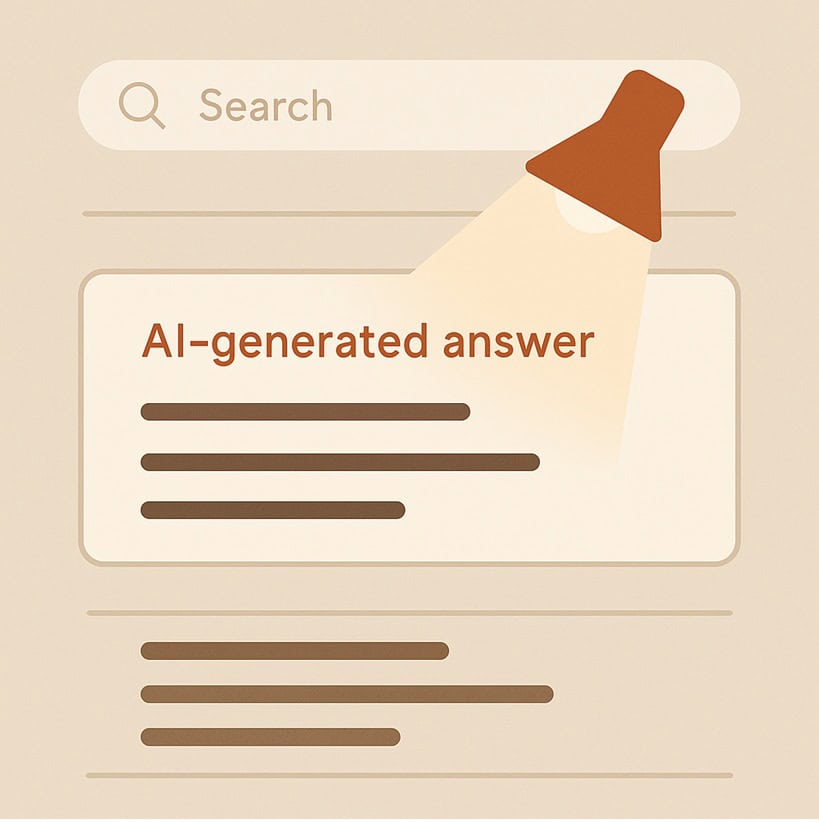
AEO for Authors: How to Become AI’s Preferred Answer
“Answer engines reward clarity, structure, and usefulness, not tricks.” —Greg Corrado, Senior Research Director, Google AI
Search is changing. And for new indie authors, that change is a huge opportunity.
Today, readers no longer just type keywords into Google. They ask questions directly inside AI tools like ChatGPT, Gemini, Claude, Perplexity, and AI-powered browsers. Instead of showing ten blue links, these tools usually deliver one clear answer.
That’s where AEO (Answer Engine Optimization) comes in.
AEO is how you structure your content, so AI tools choose your explanation as the answer.
For new indie authors, this matters more than ever. If AI consistently pulls your content when people ask about writing, publishing, or books in your genre, you become the trusted voice, even before readers know your name.
This writer’s guide shows new indie authors how AEO works and how to use it step by step, without tech overwhelm.
What Is AEO? (A Simple Definition)
Answer Engine Optimization (AEO) means creating content that is:
- Easy for AI to understand
- Clearly structured
- Written in plain, human language
- Directly focused on answering real questions
AI tools favor content that:
- Opens with a clear answer
- Includes clean definitions
- Uses lists and steps
- Provides short examples
- Mirrors how real people ask questions
If your article or blog does those things, AI is far more likely to use it as a trusted answer.
Why AEO Matters for New Indie Authors
When AI tools choose your content as the answer:
- Your ideas reach readers who may never visit your website
- AI systems begin to recognize and reuse your explanations
- Your authority grows without a large platform
- Your content supports long-term discoverability
- Your name becomes associated with helpful, accurate guidance
AEO is essentially how a new indie author becomes “the expert AI trusts.”
This is especially powerful for:
- Non-fiction authors
- Author-coaches and educators
- Writers sharing publishing advice
But fiction authors benefit too through the following:
- Genre questions
- Trope explanations
- Book recommendation queries
- Theme-based searches
If AI sees your content as clear and reliable, it will use it everywhere.
The AEO Content Formula: What AI Looks for First
To help AI select your content as a preferred answer, include these five elements.
1. Start with a Definition
AI relies heavily on definitions to understand meaning.
Example:
A book outline is a structured plan that organizes the main sections or story beats before drafting.
2. Give the Direct Answer First
Answer the question immediately, then explain.
Example:
Yes, new indie authors can appear in AI answers even without a high-authority website.
3. Use Step-by-Step Lists
Lists are easy for AI to scan, summarize, and reuse.
4. Add FAQ Sections
FAQs mirror real user questions, and AI often pulls them word-for-word.
5. Include a Short Summary
Brief summaries help AI confirm accuracy and intent.
The AEO Answer Template (For Indie Authors)
New indie authors can use this structure again and again:
Q: What is the question a reader might ask?
A: One clear sentence that answers it directly.
Then add:
- A short explanation
- A simple example
- A short list of steps
- Related FAQs
This format aligns perfectly with how AI systems extract answers.
How AI Chooses Which Content to Use
AI tools favor content that is:
- Structured
- Clear
- Free of fluff
- Definition-rich
- Helpful and accurate
- Supported by examples
Behind the scenes, AI also looks for:
- Consistent explanations across your site
- Clear topical focus
- Internal links between related articles
- Natural, conversational language
For new indie authors, the best AEO strategy is simple:
Write clean, focused answers within your niche consistently.
AEO Examples New Indie Authors Can Use
Example 1: Writing Craft
Q: What is a book outline?
A: A book outline is a structured guide that organizes the central ideas or plot points before writing.
Then add:
- A short explanation
- A 4–6 step list
- A quick example
Example 2: Self-Publishing
Q: How do new indie authors market books?
A: New indie authors market books by identifying their target readers and building consistent visibility through email, social media, and promotions.
Example 3: Fiction & Genre
Q: What makes YA sci-fi exciting?
A: YA sci-fi is exciting when it blends high stakes, relatable teen heroes, futuristic technology, and fast-paced adventure.
This structure is ideal for AEO.
Why Some Indie Author Content Doesn’t Get Picked Up by AI
Common AEO blockers include:
- Long introductions before answering the question
- Overly complex writing
- Too much storytelling before clarity
- Missing definitions
- No FAQs
- No concrete examples
AI needs polish, and it needs clarity.
How New Indie Authors Should Format Content for AEO
AI-friendly author websites usually include:
- Clear headings (H2, H3)
- FAQ sections
- Glossaries or definitions
- Skimmable formatting
- Regular updates
If you’re publishing articles as a series, you’re already building a strong AEO foundation.
AEO Checklist for New Indie Authors
Use this checklist when publishing new content:
- Direct answers at the top
- Clear definitions included
- Step-by-step lists
- Simple examples
- FAQ sections
- Short summaries
- Clean headings
- Plain language
- Consistent niche focus
- Updated content
Final Encouragement for New Indie Authors
AEO is about being genuinely helpful in a way AI can understand.
When new indie authors write clear, structured, reader-focused content, AI naturally amplifies it. That’s how your expertise travels farther than your platform. And it’s why AEO belongs in every new indie author’s strategy going forward.
TIP: If you’d like to have all of the AI powered search strategies in one place, read SEO, GEO, and AEO for Indie Authors: Strategic Optimization for AI Search (paperback or eBook).
FAQs
Q: How is AEO different from SEO?
A: AEO focuses on structuring content so AI tools can deliver it as a direct answer, while SEO focuses on optimizing content to rank in traditional search engine results. For new indie authors, AEO prioritizes clear definitions, concise answers, and question-based formatting. In contrast, SEO emphasizes keywords, backlinks, and page-level optimization.
Q: How do AI search engines decide what content to show?
A: AI search engines evaluate content based on clarity, accuracy, experience, structure, and trust signals such as E-E-A-T. Content that answers real questions clearly and consistently is more likely to be surfaced.
Q: How can authors make content AI-friendly?
A: Authors can make content AI-friendly by using clear headings, concise paragraphs, definitions, examples, FAQs, and structured formatting that makes answers easy to identify.
Q: Does AI search replace Google search?
A: No. AI search complements traditional search. Google still drives discovery, while AI systems summarize, recommend, and reuse content. Authors benefit from optimizing for both.
We trust you’ve found this writer’s guide both enlightening and inspirational. It’s designed to equip you with the tools and insights to bolster your success as a burgeoning author.
The path of writing is one of ceaseless learning and growth. You are not expected to tread this path solo. We’re thrilled to accompany you on this journey, offering support and motivation at every turn. Our objective is to deliver foundational knowledge and pragmatic guidance, enabling you to traverse the literary landscape with amplified confidence.
For more guidance, see other writer’s guides in this series. I suggest starting with the first one: Is SEO Dead? What to Know About GEO and AI Search.
If you have a draft you want to publish with the help of AI, read, Is Your Book Ready to Self-Publish? Lastly, for help writing a non-fiction book, read Write Your First Non-Fiction eBook: a 30-Day Workbook for Getting It Done.
How can we help? To let us know, please fill out our Contact form.
Happy writing!