AI Search: What to Understand about SEO, GEO, AEO
“Write for users, not algorithms. If AI or search engines understand your page, that’s a result, not the goal.” —John Mueller, Google Search Advocate
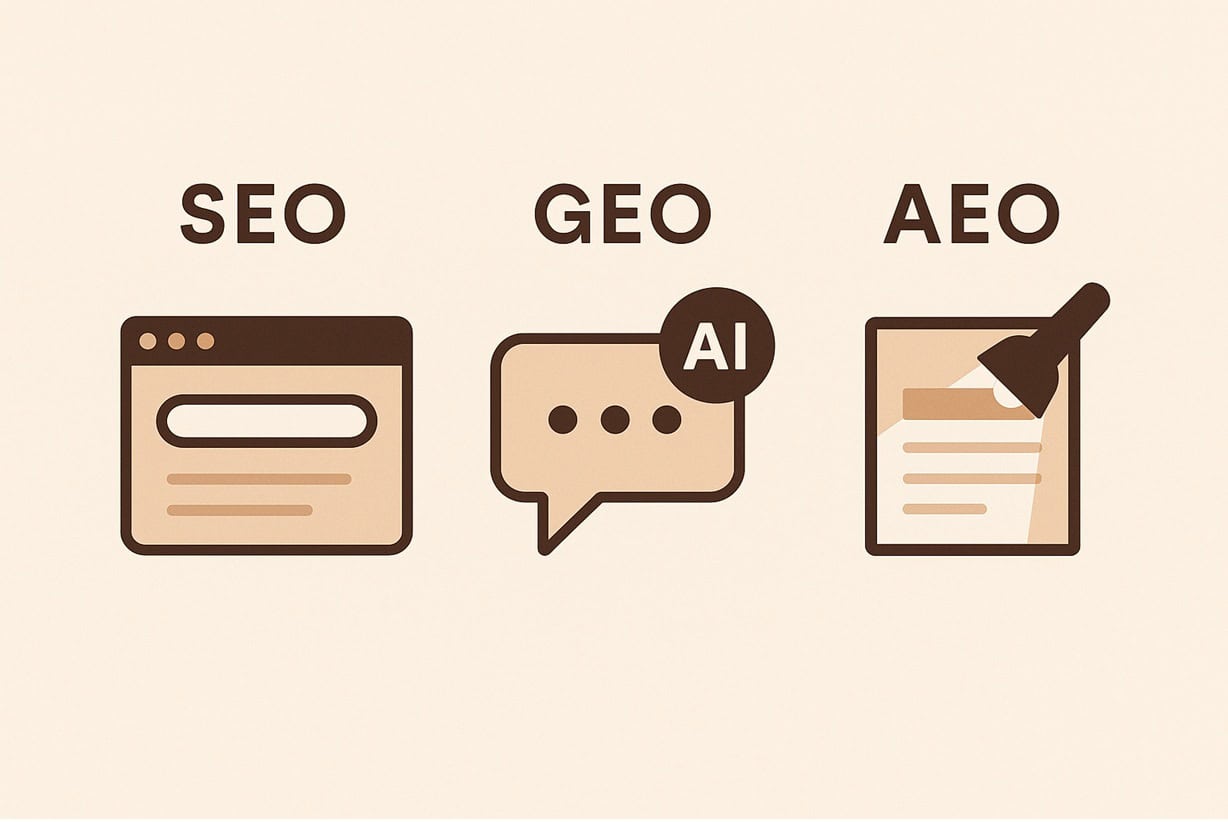
Search is evolving faster than ever. For new indie authors, staying visible online now means understanding three different, yet connected, strategies for AI Search:
- SEO (Search Engine Optimization)
- GEO (Generative Engine Optimization)
- AEO (Answer Engine Optimization)
These terms can feel overwhelming, especially if you’re a new indie author juggling writing, marketing, and publishing tasks. But the truth is simple. Understanding these AI search strategies can give you confidence in your ability to reach readers.
You don’t have to master everything. You need to understand how they work together.
This part of our SEO, GEO, and AI Search for Indie Authors Series breaks down the three (SEO, GEO, and AEO) in a friendly, skimmable way. It shows you exactly how each one helps readers discover your work, helping you feel reassured and less anxious about mastering these concepts. If you’d like to have all of the AI powered search strategies in one place, read SEO, GEO, and AEO for Indie Authors: Strategic Optimization for AI Search (paperback or eBook).
What is SEO? (Search Engine Optimization)
SEO is the classic strategy for getting your content found on Google and Bing. Its goal is straightforward:
Purpose:
Help search engines rank your content higher so readers click through to your website.
How It Works:
SEO focuses on:
- Keywords
- On-page structure
- Technical performance (speed, mobile-friendliness)
- Backlinks
- Relevance
- Content depth
For indie authors, strong SEO means:
- Your website appears when people search for writing advice
- Your book pages show up when readers search for your genre
- Blog posts bring organic traffic month after month
Even as AI search surges, SEO remains foundational.
SEO Example for Authors:
If a reader types “how to self-publish a book,” and you’ve written a helpful guide on that topic, SEO is what gets your article on page 1.
What is GEO? (Generative Engine Optimization)
GEO is the new frontier. Instead of ranking your website, GEO focuses on helping AI models (such as ChatGPT, Gemini, Copilot, Claude, and Perplexity) incorporate your content into their responses.
Purpose:
Help AI engines recognize your content as valuable, authoritative, and structured, so they quote or summarize it.
How It Works:
GEO emphasizes:
- Clear headings
- Lists and bullet points
- Q&A sections
- Strong summaries
- Author expertise + E-E-A-T
- Consistent updates
- Credible citations
When you optimize for GEO, AI tools may:
- Include your content in their answers
- Cite your website
- Surface your expertise to users who never click a link
This may sound strange, but it’s the new reality of search:
Readers may engage with your content through AI even if they never visit your website.
GEO Example for Authors:
A user asks ChatGPT:
“What are the best ways for indie authors to market their books?”
If your blog includes a well-structured, clear explanation, ChatGPT may use or summarize it in its response.
What is AEO? (Answer Engine Optimization)
AEO is closely related to GEO. So close, in fact, people sometimes mix them up. But they’re not the same.
Purpose:
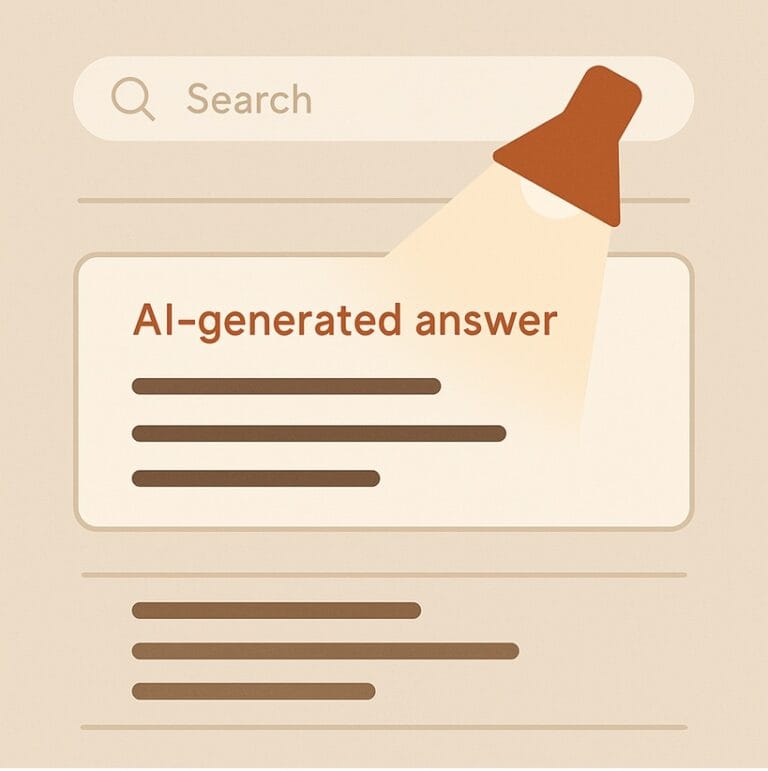
Help AI models choose your content as the preferred answer to a specific question.
Where GEO helps you appear in the mix,
AEO helps you become the answer.
AEO Works Best When Your Content Is:
- Direct
- Clear
- Authoritative
- Supported by examples
- Written with reader intent in mind
- Structured around specific questions
AI engines (and even Google’s AI Overviews) love content that:
- Defines terms
- Breaks down steps
- Includes FAQs
- Uses short, punchy sentences
- Provides practical takeaways
AEO Example for Authors:
Someone asks an AI tool:
“What does user intent mean in SEO?”
If an article has a clean definition at the top of a section, AEO makes it more likely that your explanation is the one the AI picks.
SEO, GEO, AEO — A Simple Comparison
| Optimization | Primary Goal | Who It’s For | How It Helps Indie Authors |
| SEO | Rank on search engines | Google, Bing | Improves organic traffic to your website |
| GEO | Appear in AI-generated answers | ChatGPT, Gemini, Copilot, Claude | AI quotes or summarizes your content |
| AEO | Become the top AI answer | Answer engines & AI Overviews | Establishes your authority on a topic |
Each strategy supports the others, forming a cohesive team that enhances your content’s reach and authority across all search environments.
How These AI Search Strategies Work Together
Instead of thinking of SEO, GEO, and AEO as separate strategies, imagine them as a ladder:
STEP 1 — SEO
Readers find your website through traditional search.
STEP 2 — GEO
AI engines learn from and reference your content.
STEP 3 — AEO
Your content becomes the preferred answer used by AI tools.
NOTE: When you write content that is:
- Clear
- Relevant
- Intent-focused
- Structured
- Helpful
…you end up optimizing for all three at once.
It’s content synergy at its best.
Understanding what you need to do is key; following simple, actionable rules can significantly improve your online visibility and keep you motivated.
You don’t need separate strategies for each.
You only need to follow a few simple rules.
Write clear, helpful content
Avoid fluff. Go straight to the point.
Use headings
AI engines read your structure first.
Include lists
Bullets help both humans and machines.
Answer questions directly
One-sentence answers at the top of each section work beautifully.
Include FAQs
Answer engines love these.
Add short summaries and TL;DRs
Perfect for GEO.
Use real examples
This builds credibility.
Cite sources when relevant
AI models trust cited content.
Real-World Examples for New Indie Authors
Example 1 — SEO Success
Blog post: “How to Outline a Sci-Fi Novel in 5 Steps”
Optimizing for SEO (keywords + structure) helps you rank on Google.
Example 2 — GEO Success
The same article includes lists and a summary.
Now, AI tools can easily summarize or quote your content.
Example 3 — AEO Success
You add a clear FAQ:
“What is the best outline structure for sci-fi?”
You provide a direct definition.
AI sees your answer as clean, authoritative, and complete—and chooses it.
Your single article is now working for you in three different search environments.
Why This Matters for New Indie Authors
Readers now discover authors through:
- YouTube
- Social media
- ChatGPT
- Gemini
- Bing Copilot
- TikTok
- BookTok
- Forums
- Email newsletters
- AI assistants
- AI-powered browsers
Search is no longer one doorway. It’s a hallway with many doors.
By understanding SEO, GEO, and AEO, you ensure readers can find you no matter which door they choose.
Printable Checklist: SEO, GEO, AEO Essentials
SEO (Search Engine Optimization)
- Include natural keywords
- Write comprehensive content
- Optimize images
- Improve site speed
- Use internal links
GEO (Generative Engine Optimization)
- Use headings and subheadings
- Include summaries and lists
- Add FAQs
- Cite reliable sources
- Keep content updated
AEO (Answer Engine Optimization)
- Provide direct answers
- Define key terms
- Use short sentences
- Include step-by-step explanations
- Target question-based queries
FAQs
What’s the difference between SEO, GEO, and AEO?
SEO focuses on ranking content in search results, GEO focuses on making content usable by AI systems, and AEO focuses on providing clear answers AI can reuse. Together, they help authors get discovered by both humans and machines.
How do AI search engines decide what content to show?
AI search engines evaluate content based on clarity, accuracy, experience, structure, and trust signals such as E-E-A-T. Content that answers real questions clearly and consistently is more likely to be surfaced.
Do keywords still matter in AI-driven search?
Yes, but differently. Keywords help establish topic relevance, while intent and clarity determine whether content is reused by AI systems. Keywords open the door; helpful answers keep it open.
Can new indie authors compete with big websites?
Yes. New indie authors often have an advantage because AI systems value firsthand experience, clarity, and relevance. Well-structured content written from real experience can outperform larger sites that publish generic information.
We trust you’ve found this writer’s guide both enlightening and inspirational. It’s designed to equip you with the tools and insights to bolster your success as a burgeoning author.
The path of writing is one of ceaseless learning and growth. You are not expected to tread this path solo. We’re thrilled to accompany you on this journey, offering support and motivation at every turn. Our objective is to deliver foundational knowledge and pragmatic guidance, enabling you to traverse the literary landscape with amplified confidence.
For more guidance, see other writer’s guides in this series, starting with the first one, Is SEO Dead? What to Know About GEO and AI Search.
How can we help? To let us know, please fill out our Contact form.
If you have a draft you want to publish with the help of AI, read, Is Your Book Ready to Self-Publish? Lastly, for help writing a non-fiction book, read Write Your First Non-Fiction eBook: a 30-Day Workbook for Getting It Done.
Happy writing!